
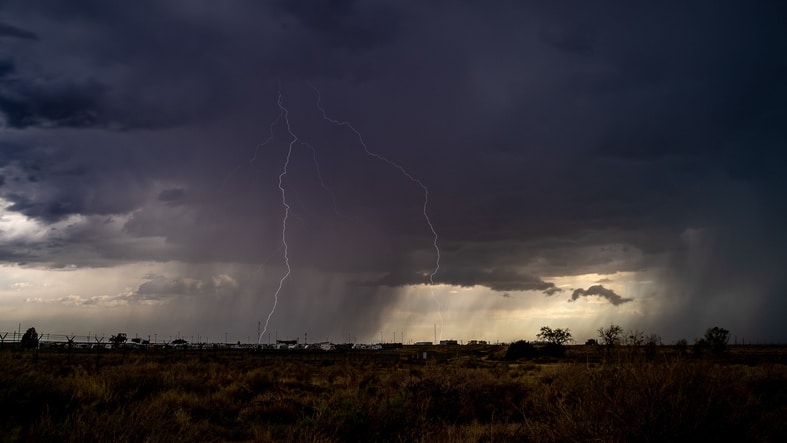
If you wear hearing aids, monsoon season means water is on the way, and when it comes to hearing aids, moisture is your biggest risk factor for damage. That’s because heat, humidity and sudden storms can quietly affect how your devices work long before you notice the issue.
Why Does Monsoon Season Affect Hearing Devices?
New Mexico’s monsoon season typically runs from June 15 through September 30 and brings a seasonal shift toward humid air, afternoon storms and rapid weather swings,1 according to the National Weather Service.
In New Mexico, moisture travels north from the Gulf of California and Gulf of Mexico, increasing humidity and triggering frequent thunderstorms, and this year’s monsoon season is expected to be wetter than average.2
Humidity is a measure of moisture in the air, and even small amounts can build up inside a hearing device. Over time, that can affect sound clarity or cause internal damage like wiring shorts.
Simple Ways to Protect Your Devices Day to Day
During monsoon season, unexpected humidity swings can occur throughout the day or night. Integrating these steps into your routine can make them automatic over time.
- Take hearing aids out before showering, but don’t leave them in your bathroom afterward. Bathrooms can remain humid for hours.
- Avoid leaving hearing aids near windows or exterior walls where overnight humidity changes can cause condensation while you sleep.
- After sudden storms or humid afternoons, wipe them down even if they don’t feel wet. Moisture can build invisibly.
- Use a hearing aid drying box overnight, especially after days with storms, heavy cloud cover or muggy air that doesn’t fully dry out
These small adjustments help account for something many people don’t notice during monsoon season: humidity doesn’t just rise, it fluctuates quickly.
Can Humidity Alone Damage Hearing Aids?
Yes. Even without direct water exposure, humid air can slowly seep into hearing aids. That moisture can interfere with electronics, degrade sound quality and cause corrosion if it builds up over time.
What Is the Safest Way to Store Hearing Aids During Wet Weather?
Store them in a cool, dry place outside the bathroom, ideally in a protective case or drying container. Consistent dry storage helps prevent hidden moisture from damaging internal components.
When It’s Worth Getting Your Hearing Checked
If your hearing aids don’t sound quite right this summer, it’s not always the device itself. Sometimes it’s your hearing changing, or a small issue building up over time.
That’s where a simple hearing test comes in.
At Southwestern Hearing & Balance, care is centered on understanding what’s actually causing your symptoms, whether it’s your device, your hearing, or both. We work with you directly, without rushing the process.
Sometimes it only takes a small adjustment to make everything clear again.
Either way, you don’t have to figure it out on your own.
Sources
1National Weather Service. “North American Monsoon Highlights.” https://www.weather.gov/abq/prepawaremonsoonhome
2Hearing Industries Association. “Protecting Your Hearing Aids for the Long-Term.” https://www.betterhearing.org/newsroom/blogs/protecting-your-hearing-aids-for-the-long-term/ Learn More: